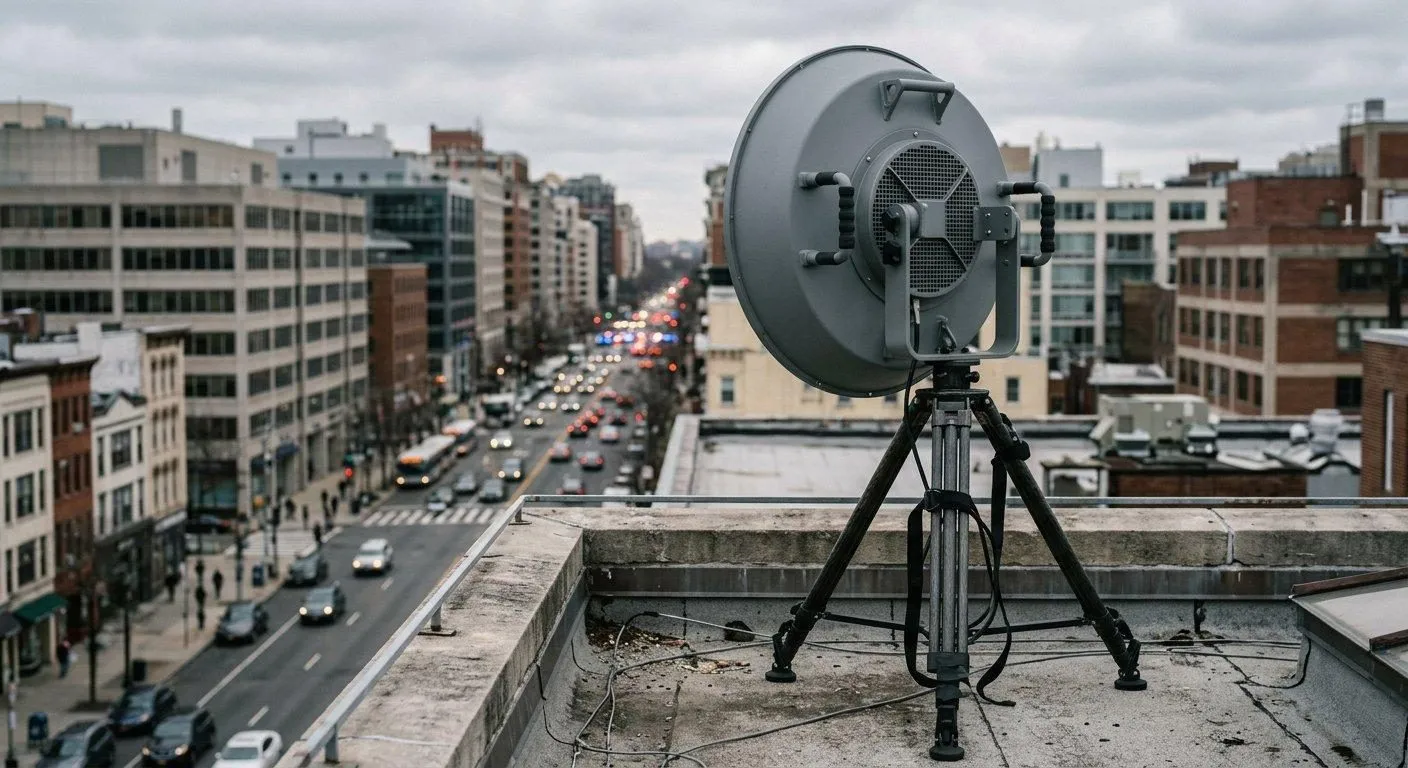
Long-Range Acoustic Devices - Focused Sound for Hailing and Crowd Management with Pro-LRAD
Pro-LRAD projects focused, intelligible speech up to 700 meters for maritime hailing, emergency notification, crowd management and infrastructure protection.
A long-range acoustic device, usually shortened to LRAD, is in essence a loudspeaker with the directivity of a spotlight: instead of flooding an area with sound, it projects a narrow and intelligible beam toward a defined group of people hundreds of meters away. The class appeared at the start of the 2000s, when naval forces asked for a way to hail approaching vessels from a safe stand-off distance, and it has since spread to law enforcement, emergency notification and infrastructure protection. ProDefence lists a system of this class under the name Pro-LRAD, stating an effective projection distance of up to 700 meters for crystal-clear audio.
The technology carries two reputations at once. For operators it is a communication tool that replaces shouting and sirens with clear speech; for critics it is the "sound cannon" associated with deterrent tones and crowd dispersal. This overview stays on the technical side: how the beam is formed, what a figure like 700 meters actually means, where such devices are deployed, and what separates one system from another when comparing specifications.
What a long-range acoustic device is
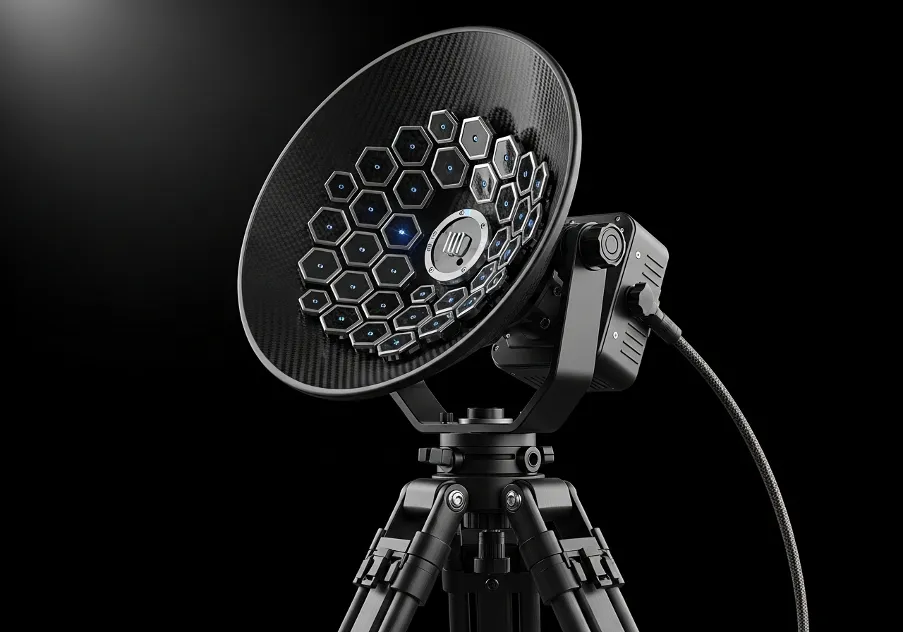
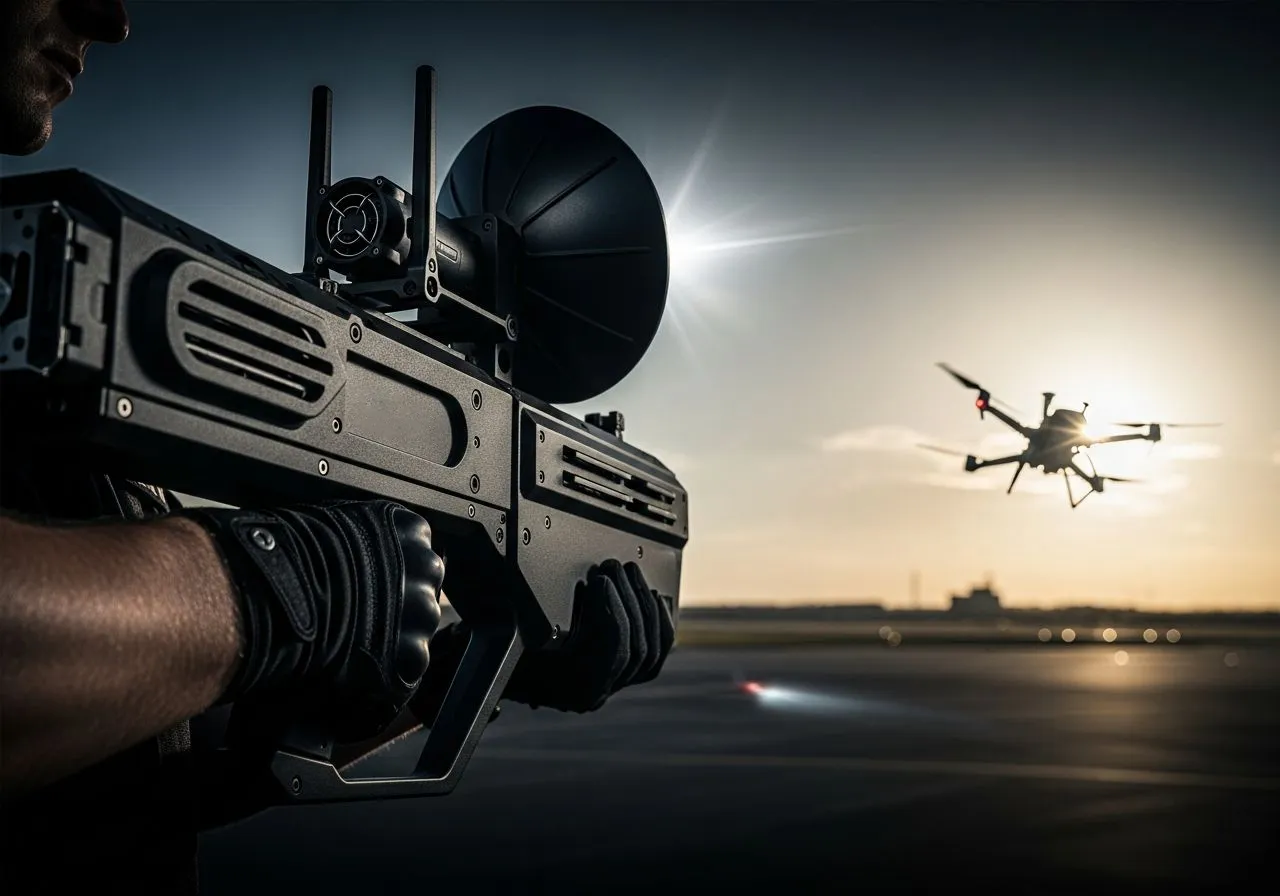
An LRAD-class device is an acoustic hailing device: a flat panel of loudspeaker drivers, driven in phase, that forms a tight beam of sound in the speech band. The category was shaped commercially after 2000 in the context of force protection - the attack on the USS Cole had shown how vulnerable a ship is when it cannot talk to a small boat until the boat is already close. The first mass deployments were therefore maritime; civil applications followed when cities realized the same beam could be used for evacuation instructions and for addressing crowds from a distance at which an officer with a megaphone is no longer heard.
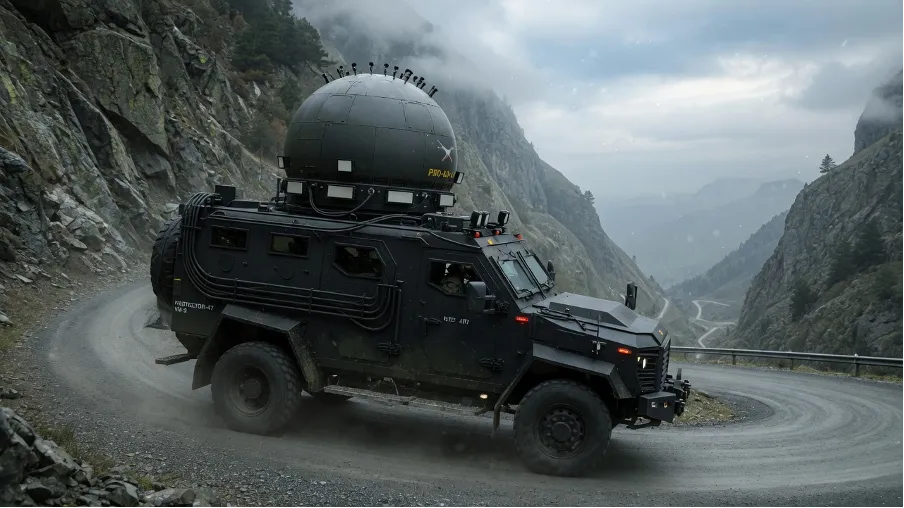
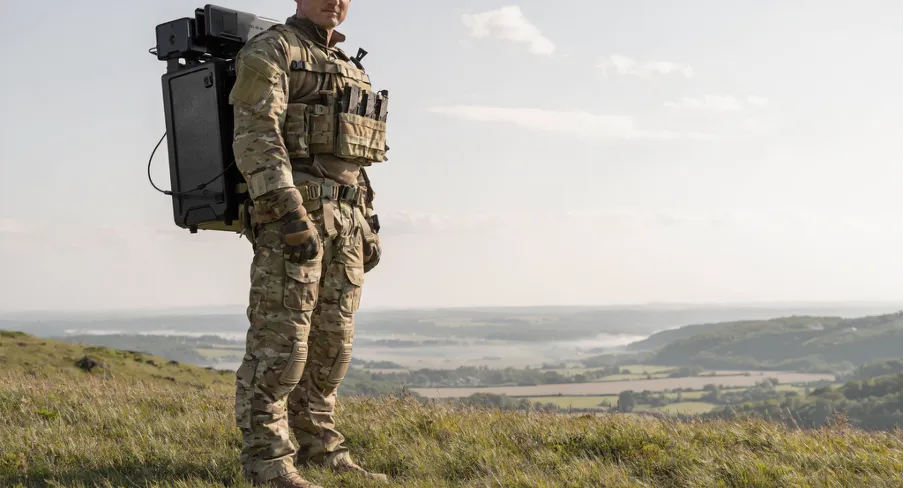
Today the class includes several manufacturers and form factors, from handheld units to vehicle- and mast-mounted systems. ProDefence positions Pro-LRAD as a portable representative of the class, emphasizing two parameters on its public page: projection of intelligible audio up to 700 meters and safe use - communication and crowd management without causing auditory harm. Both claims describe the communication role of the class rather than the deterrent one, which is where the interesting engineering lies.
Physics of a narrow sound beam
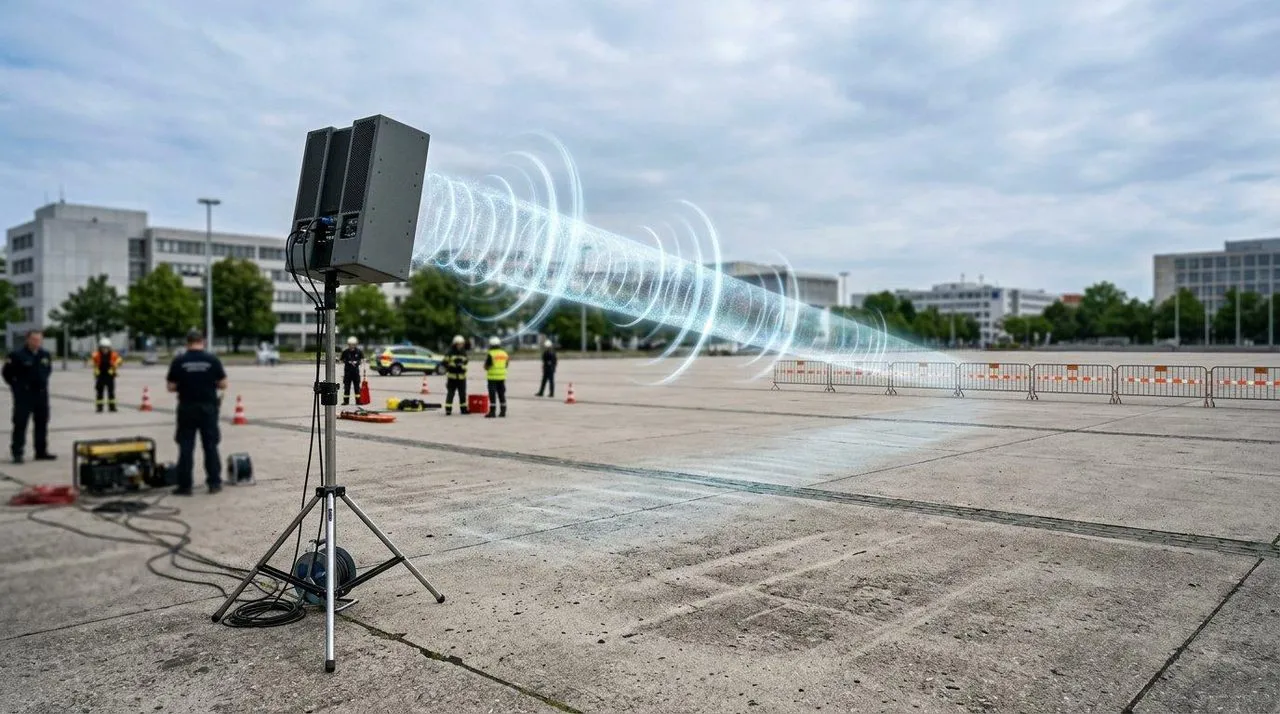
Ordinary loudspeakers spread sound over a wide arc, so pressure drops quickly and speech drowns in reflections. A panel of drivers emitting in phase behaves differently: when the aperture is large compared with the wavelength, interference concentrates the energy into a forward lobe of roughly 15 to 30 degrees. Inside that lobe the sound level falls off far more slowly than with a point source, and - just as important - the message does not echo from every building behind the audience. The result is the defining feature of the class: a voice that stays clear at distances where any conventional horn has become noise.
Reading a figure like 700 meters correctly requires one clarification: it describes the distance at which speech remains intelligible under favorable conditions, not a wall of sound. Intelligibility is measured formally with indices such as STI, and it depends on background noise, wind and humidity, which absorb high frequencies first. Vendors quote best-case envelopes; independent tests of LRAD-class systems generally confirm voice ranges in the hundreds of meters for the larger panels, with smaller, portable units trading range for weight. The honest question is never "how far does it shout" but "how far is it understood, and at what sound level at the ear."
Hailing, warning or deterrence: where is the line?
The controversy around the class comes from a second mode most devices include: a high-pitched attention or deterrent tone, far louder and more unpleasant than any speech. It is this mode that produced the "sound cannon" headlines after several high-profile crowd-control deployments, and it is also the reason medical literature discusses temporary threshold shift and hearing risk when such tones are used at close range. The same hardware, in other words, can deliver a spoken evacuation order or a painful wall of tone, and doctrine - not electronics - separates the two.
ProDefence's public description deliberately frames Pro-LRAD on the communication side: clear audio, emergency notifications, crowd management "without causing auditory harm." That framing follows hearing-safety logic: spoken messages at realistic stand-off distances produce levels comparable to other public-address scenarios, provided the operator respects distance and exposure limits. For any buyer in this class, the doctrine questions - when tones are authorized, what minimum distances apply, how operators are trained - deserve as much attention as the decibel table.
Typical deployment scenarios
Across manufacturers and user reports, LRAD-class systems cluster into a stable set of missions:
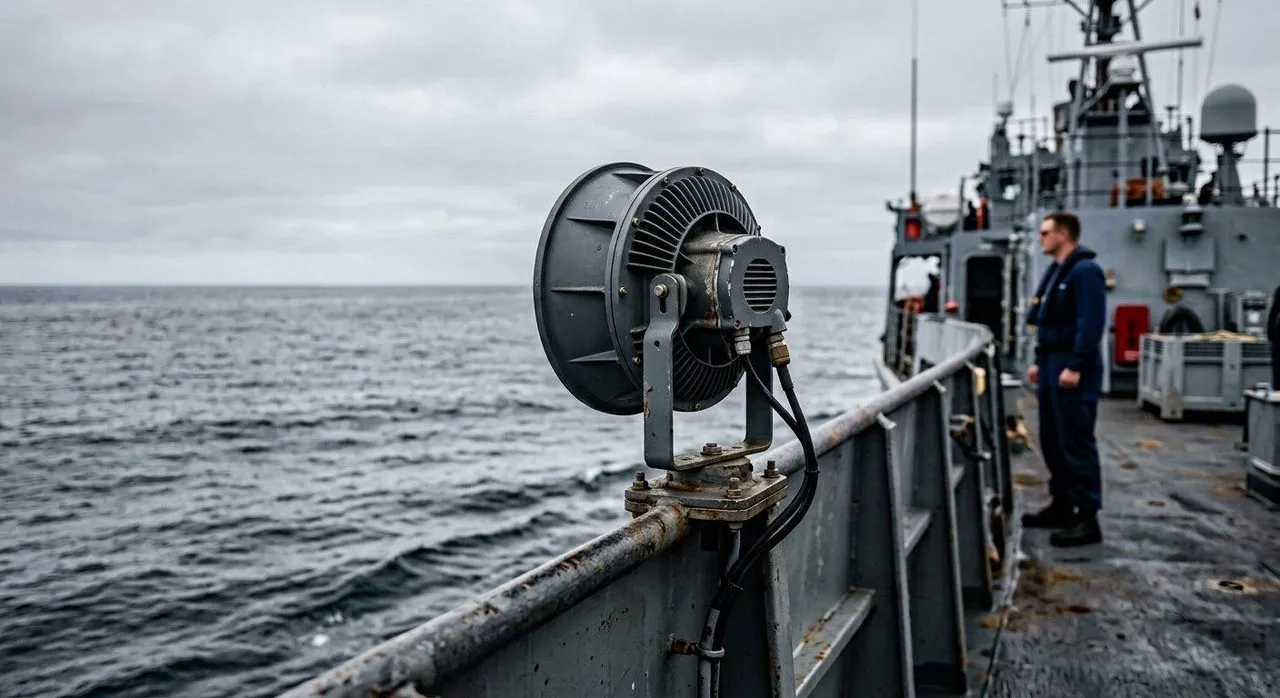
- Maritime hailing and vessel protection - establishing communication with approaching craft before they enter a exclusion zone.
- Checkpoints and convoys - instructing drivers and pedestrians from a protected position, in a defined language sequence.
- Emergency mass notification - evacuation orders during wildfires, floods or industrial accidents, where sirens carry no words.
- Crowd communication at large events - directions, schedule changes and safety instructions for specific sectors.
- Critical infrastructure - warning intruders at perimeters of airports, power plants and ports before physical response arrives.
- Wildlife and bird control - dispersing birds from runways and landfill sites with directed signals.
How do you compare LRAD-class systems?
Marketing pages of the entire class list maximum output and little else; serious comparison requires a longer checklist. The parameters that actually predict field performance are these:
- Intelligible range with a stated measurement method - ideally an STI score at distance, not just peak decibels at one meter.
- Beam width and dispersion control - whether the lobe can be widened for area coverage or kept tight for a corridor.
- Maximum sound pressure level and its certified hearing-safe envelope for speech and tone modes.
- Weight, power and autonomy for the portable role - battery hours at realistic output, not standby.
- Mounting options: tripod, vehicle, mast or vessel, and stabilization on moving platforms.
- Message handling: live microphone quality, pre-recorded multilingual libraries, and recording of what was actually broadcast.
Pro-LRAD fits the portable end of that checklist: the vendor presents a mobile device with a 700-meter clear-audio envelope, positioned for communication-first scenarios from crowd management to emergency notification. As with the whole class, the hardware is only half of the system - the other half is doctrine, training and a legal frame that decides which mode may be used against people at all. Measured against that full picture, a long-range acoustic device is best understood not as a weapon but as the loudest, most directional public-address tool a security service can field.








































































Trusted Worldwide
Operating in more than 50 countries, we provide cutting-edge defense solutions that ensure your safety to every corner of the globe.
Get Advice From Our Experts
Please complete the feedback form to gain exclusive access to our catalog showcasing models that are not available on our website
We’re here to assist you with any inquiries, support, or information you need. Whether you're interested in our defense products, looking to collaborate, or simply have a question, our team is ready to help.