Radar Cross Section Engineering
Analyzing the Radar Cross Section of Targets
Visibility in the electromagnetic spectrum is a sentence passed by physics, but executed by engineering. In the high-stakes arena of aerial dominance, the ability to minimize radar cross section distinguishes a survivor from a statistic on a screen. It is not merely about making an object smaller; it is about convincing the sensor that the mountain is a grain of sand. The strategic manipulation of surfaces — creating angles that deflect energy into the void rather than back to the receiver — has become the defining obsession of aerospace defense.
To the uninitiated observer, the concept seems closer to magic than science. However, when we ask what is radar cross section in the context of military aviation, we are effectively inquiring about the electromagnetic echo of a target. It is a quantifiable measure of how detectible an object is to a radar system. A massive bomber can have the signature of a bird, provided the mathematics of its outer shell are calculated with sufficient cruelty towards the laws of reflection.
The Physics of Reflection
The interaction between an object and the probing electromagnetic waves determines survival. The erratic behavior of rcs radar signals when they strike a complex shape involves scattering, diffraction, and surface traveling waves. A flat plate perpendicular to the source is a mirror; a sphere is a consistent but inefficient reflector. The goal is to eliminate the mirrors and distort the spheres.
Variables that dictate the magnitude of the return include:
- electrical size of the target relative to the wavelength;
- polarization of the transmitted and received waves;
- geometric complexity of the fuselage.
These factors combined create the unique fingerprint of any flying object.
Conceptually, this metric is an abstraction rather than a geometric reality. If one were to explain what is a radar cross section to a layperson, it is best described as the area of a perfectly reflecting metal sphere that would produce a reflection of the same intensity as the target in question. This hypothetical sphere allows engineers to standardize the chaotic data received from jagged, real-world shapes.
Real-world applications, however, are rarely spherical. The radar cross section of targets is highly dependent on the aspect angle—the direction from which the radar views the object. A fighter jet viewed from the nose might be nearly invisible, while the same aircraft presents a massive barn door of a target when banking to expose its underbelly. This dynamic nature makes consistent stealth a nightmare to maintain during combat maneuvers.
Measurements are often expressed in decibels relative to a square meter (dBsm). While a literal square meter seems large, radar rcs values for stealth platforms operate in the negative decibels. We are dealing with fractions of fractions. A shift of just three decibels represents a doubling or halving of the reflected power, making every rivet and seam a potential liability.
Measurement Methodologies
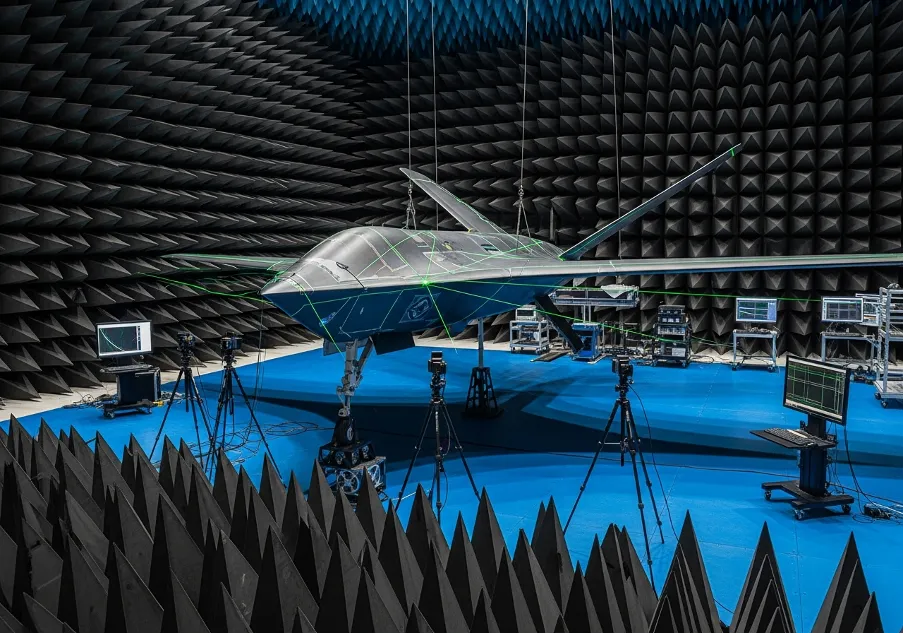
Validating these designs is an exercise in paranoia and precision. Obtaining accurate radar cross section measurements requires facilities that are arguably more complex than the aircraft they test. Anechoic chambers, lined with carbon-impregnated foam cones, simulate the infinite void of free space to ensure that the only signal returning to the sensor comes from the test subject, not the walls.
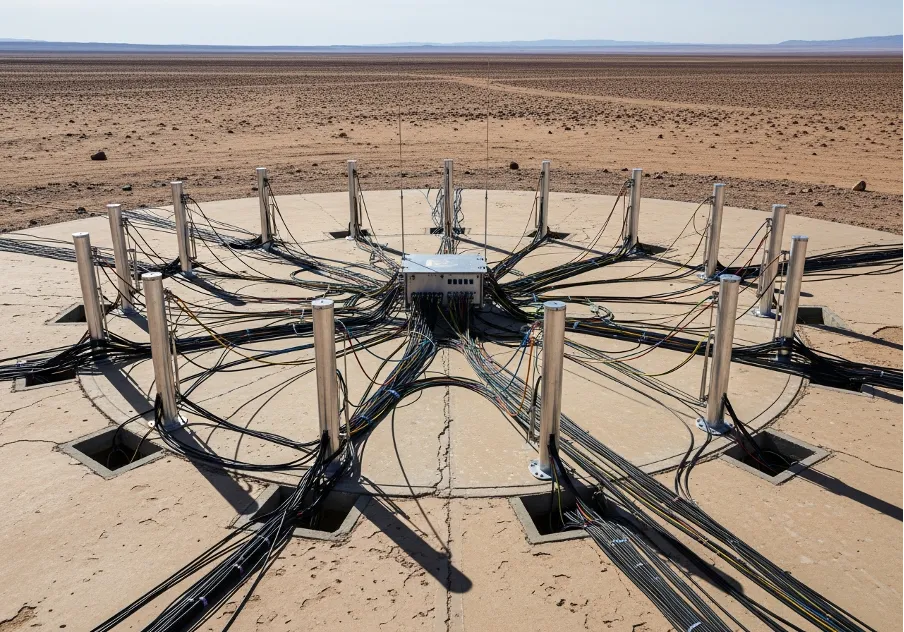
Field testing introduces the chaos of the real world. During an outdoor rcs measurement, the ground itself becomes an enemy, creating multipath interference that can distort the data. Engineers mount models on low-density foam pylons — often shaped like inverted teardrops — to minimize the support structure’s contribution to the final reading. It is a tedious process of subtraction and calibration.
The aggregate of all these reflections creates the object's identity. We refer to this total electromagnetic profile as the radar signature of the vehicle. Reducing this signature forces the enemy radar to come dangerously close before it can distinguish the noise of the background from the threat of an intruder.
Every component adds to the noise. The rcs antenna integration is particularly problematic because antennas are designed specifically to be electrically resonant. Making a device that must transmit and receive signals «invisible» to those same frequencies is an engineering paradox that requires frequency-selective surfaces and advanced band-pass radomes.
Data is meaningless without a standardized language. The industry standard radar cross section units allow for comparison across different frequencies and platforms. Whether expressed in square meters for absolute magnitude or dBsm for logarithmic scaling, these numbers determine the kill chain range of surface-to-air missile systems.
Calculation and Prediction
The mechanics of scattering are governed by Maxwell’s equations. To truly grasp how does radar cross section work, one must visualize the aircraft not as a solid object, but as a collection of scatterers — edges, corners, and cavities — interfering with one another. Some interferences are constructive, amplifying the signal; others are destructive, canceling it out.
Even the terminology can be subtle in its implications. The term radar cross-section suggests a 2D slice of a 3D phenomenon, a snapshot of energy distribution at a specific frequency. High-frequency approximations like Physical Optics assume the surface is locally flat, while exact methods solve the integral equations for every millimeter of the structure.
Computational electromagnetics has replaced much of the initial physical testing. Algorithms predict the outcome:
- Method of Moments for small, detailed structures;
- Finite Difference Time Domain for broadband analysis;
- High-frequency asymptotic methods for electrically large targets.
Simulation saves millions of dollars in prototype fabrication.
The stakes are highest for strategic assets. The radar cross section of aircraft such as the B-2 Spirit or the F-22 Raptor is a closely guarded secret, rumored to be comparable to that of a metal marble or a bumblebee. Achieving this requires aligning edges so that radar spikes are confined to very narrow, non-threatening angles.
Comparative analysis drives the arms race. Different radar cross sections dictate the tactics of engagement; a non-stealth aircraft must rely on jamming and speed, while a low-observable platform relies on the inability of the enemy to establish a weapons-grade lock. The geometry dictates the doctrine.
Comparative Analysis
Historical evolution shows a dramatic curve. Early aircraft rcs was enormous, with exposed turbine blades and vertical stabilizers acting as perfect corner reflectors. The shift to faceted designs, and later to blended wing bodies, marked the transition from trying to outrun radar to trying to outsmart it.
Tools for estimation have become accessible even outside classified labs. A simple radar cross section calculator can now approximate the return of basic geometric shapes, showing students and engineers alike how a cylinder reflects differently than a cone. These tools highlight why the nose cones of missiles are sharp and why stealth intakes are serpentine.
The contrast between generations of fighters is stark. A radar cross section comparison between a fourth-generation F-15 and a fifth-generation F-35 reveals a reduction in return energy by several orders of magnitude. It is the difference between shouting in a library and whispering in a hurricane.
Verification is the final hurdle. Only through rigorous rcs testing on full-scale pole models can the simulations be trusted. A single protruding screw head or a gap in the radar-absorbent material can spike the return by 10 dB, rendering the stealth features useless.
Technological superiority is fleeting. The strict rcs definition serves as a baseline, but the advent of bistatic radars and low-frequency arrays challenges the traditional notions of invisibility. Physics does not change, but our ability to exploit its loopholes continues to evolve in the eternal game of hide and seek.









































































Trusted Worldwide
Operating in more than 50 countries, we provide cutting-edge defense solutions that ensure your safety to every corner of the globe.
Get Advice From Our Experts
Please complete the feedback form to gain exclusive access to our catalog showcasing models that are not available on our website
We’re here to assist you with any inquiries, support, or information you need. Whether you're interested in our defense products, looking to collaborate, or simply have a question, our team is ready to help.