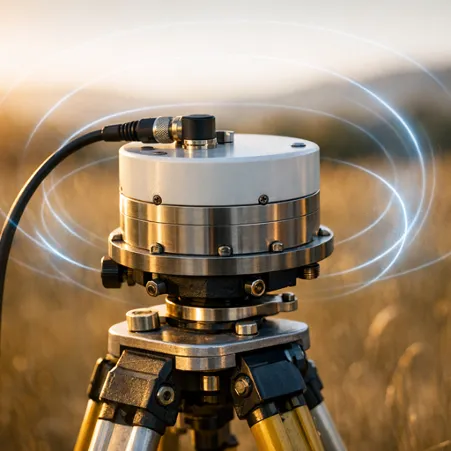
Magnetometer Meaning Decoded
What Are Magnetometers Used For Today
Every smartphone carries one. Every satellite relies on one. A magnetometer - a sensor built to detect the strength and direction of magnetic fields - quietly supports technologies most people never think about. From guiding aircraft over oceans to revealing ancient settlements buried under farmland, this instrument converts an invisible physical force into usable data.
Understanding how magnetometers operate opens a window into geophysics, navigation, archaeology, and space exploration. The principles behind these sensors date back centuries, yet the latest generations achieve sensitivity levels that would have seemed impossible just decades ago.
What a Magnetometer Does and Why It Matters
At its core, what is a magnetometer? It is a device that senses magnetic flux density - the concentration and orientation of magnetic field lines passing through a given area. The instrument outputs an electrical signal proportional to that flux, which software then interprets as a numerical value in teslas or gauss.
Search queries sometimes appear as magnometer or magentometer - both are common misspellings of the same instrument. Regardless of how it is typed into a search bar, the underlying technology stays the same: a sensor element reacts to external magnetic influence and converts that reaction into a measurable quantity.
Earth itself generates a geomagnetic field ranging roughly from 25 to 65 microteslas at the surface. A magnetometer picks up this background signal and, more importantly, registers deviations from it. A buried iron cannon from a 17th-century shipwreck, a volcanic dike hidden beneath sediment, a submarine gliding through deep water - each distorts the local field in a pattern the sensor can capture.
The resolution of modern instruments reaches the picotesla range. That level of precision allows researchers to map subsurface geology without drilling a single hole, saving time and budget on exploration projects.
How Magnetic Field Measuring Shapes Modern Technology
Several families of magnometers exist, each built around a different physical principle. The choice depends on the required sensitivity, speed, size, and operating environment. Here is what does a magnetometer do in practical terms: it translates an invisible force into numbers engineers and scientists can act on.
Magnetic field measuring technology splits into two broad categories - scalar and vector. Scalar instruments report total field intensity. Vector instruments report both intensity and direction along three axes. The distinction matters because different tasks demand different data.
The most widely deployed types include:
- fluxgate sensors, which drive a ferromagnetic core in and out of saturation and read the resulting asymmetry to determine field direction and strength;
- proton precession sensors, which exploit the natural spin frequency of hydrogen nuclei aligned by a strong polarizing pulse;
- optically pumped sensors, which use laser-excited alkali vapors to detect extremely small field variations at rates exceeding 1 000 samples per second;
- Hall-effect and magnetoresistive chips, which sit inside nearly every smartphone and provide orientation data for maps and compass applications.
Each type occupies a specific niche. Fluxgate sensors dominate spacecraft missions because they handle wide dynamic ranges with low power consumption. Proton precession units serve ground-based geological surveys where absolute accuracy matters more than speed. Optically pumped models fill the gap when both speed and sensitivity must peak simultaneously - magnetic anomaly detection in defense applications, for instance.
Where Magnetometers Serve Science and Industry
Asking what are magnetometers used for produces a list that spans dozens of disciplines. The common thread is simple: wherever a magnetic signature carries information, a magnetometer extracts it.
In geophysics, survey crews tow airborne sensors behind helicopters to map mineral deposits across thousands of square kilometers in a single campaign. Iron ore, nickel sulfide, and kimberlite pipes all produce magnetic anomalies that stand out against the regional field. What does a magnetometer measure in this context? It measures the total magnetic intensity at each survey point, and post-processing software strips away the regional trend to isolate local anomalies tied to ore bodies.
Archaeologists deploy a magnetometre (the French-origin spelling still appears in European literature) at ground level to locate kilns, fire pits, ditches, and buried walls. Fired clay acquires a permanent magnetization when it cools, creating contrasts against undisturbed soil. Entire Roman fort layouts have been mapped this way without removing a single shovelful of earth.
Ocean exploration teams mount magnetometers on towed underwater vehicles to find shipwrecks, submerged pipelines, and unexploded ordnance. The sensors detect ferrous metal at distances of tens of meters through water and sediment - conditions where optical and acoustic methods struggle.
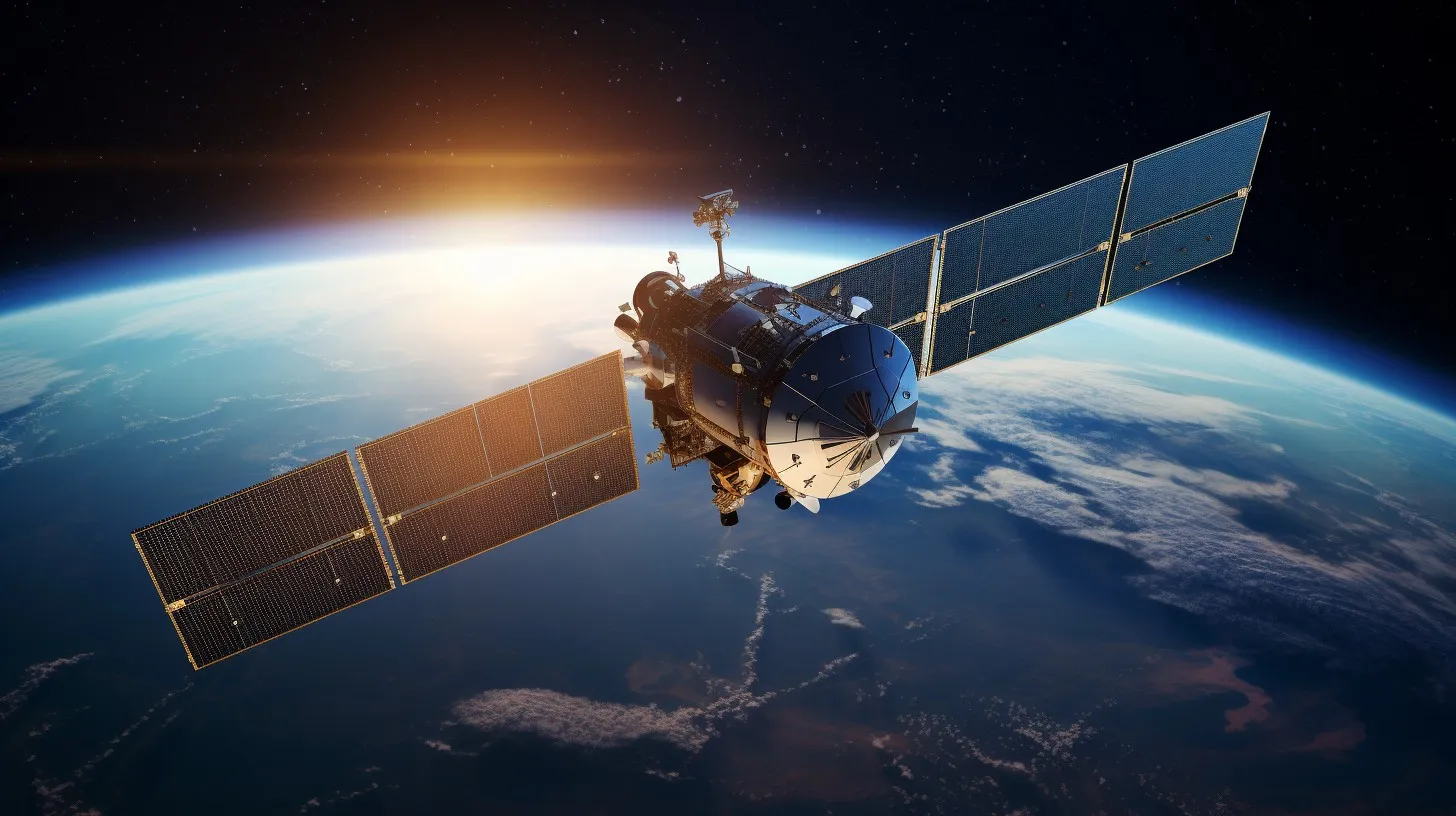
Space agencies install magnetometers on interplanetary probes. Instruments aboard missions to Jupiter and Saturn have mapped planetary magnetospheres, revealing internal dynamo processes that drive each planet's field. These datasets reshape models of planetary formation and core composition.
Practical Uses That Define the Magnetometer Meaning
Understanding what is a magnetometer used for goes beyond listing industries. The deeper magnetometer meaning lies in the ability to reveal what eyes and conventional tools cannot see.
A device that can detect small changes in magnetic fields transforms security screening, medical diagnostics, and infrastructure inspection. Specific applications include:
- airport and building security gates that sense ferrous objects passing through a controlled zone;
- magnetoencephalography (MEG) systems that record the faint magnetic fields produced by neural currents in the human brain;
- non-destructive testing of steel structures - bridges, pipelines, rail tracks - where stress and corrosion alter local magnetization patterns;
- directional drilling guidance, where downhole magnetometers help steer drill bits along planned trajectories thousands of meters underground;
- automotive sensor arrays that monitor wheel speed, throttle position, and current flow in electric vehicle powertrains.
The common factor across every application is sensitivity paired with reliability. A magnetometer installed on a pipeline-inspection pig must endure vibration, temperature swings, and electromagnetic noise from nearby pumps - yet still detect wall-thickness loss measured in fractions of a millimeter. Manufacturers achieve this through shielding, signal averaging, and adaptive filtering algorithms tuned to each operating environment.
How a Magnetometer Works From Sensor to Signal
So, how does a magnetometer work at the hardware level? The answer varies by type, but a simplified signal chain applies to most designs: expose a sensing element to the ambient field, convert its physical response into an electrical signal, amplify that signal, digitize it, and pass the result to a processor or data logger.
In a fluxgate magnetometer - the most common vector type - two coils wrap around a high-permeability core. A drive circuit pushes alternating current through the primary coil, periodically saturating the core. When no external field is present, the saturation curve stays symmetric. An external field biases the core, shifting the saturation points and producing a second-harmonic voltage in the sense coil. Electronics lock onto that harmonic, and its amplitude directly maps to the field component along the sensor axis. Three orthogonal sensors give full three-axis data.
Magnetometer aviation applications rely heavily on this architecture. Airborne survey systems mount a fluxgate or optically pumped head in a tail stinger or towed bird - far from the aircraft's own magnetic signature. Compensation algorithms subtract the platform's residual field in real time, isolating the geological signal below.
What does magnetometer measure in flight? Total field intensity and its gradient. Gradient data - captured by flying two sensors at a fixed separation - sharpens anomaly edges and suppresses regional trends. The result is a high-resolution magnetic map generated at survey speeds of 200+ km/h, covering ground that a walking crew would need months to traverse.
Signal processing closes the loop. Raw readings pass through bandpass filters to remove power-line harmonics and mechanical vibration noise. Onboard GPS timestamps each sample to centimeter-level accuracy, tying magnetic values to geographic coordinates. Post-flight, geophysicists grid the data, apply leveling corrections between flight lines, and produce contour maps or 3D inversions that guide exploration decisions worth millions of dollars.
From a pocket compass to a satellite orbiting Mercury, the magnetometer remains one of the most versatile sensing instruments in the scientific toolkit. Its range of scales - picoteslas to teslas, millimeters to planetary diameters - ensures it will keep finding new roles as technology advances and exploration pushes into uncharted territory.
Learn more about alternative systems and related products from Prodefence in Border Control.





























































































Trusted Worldwide
Operating in more than 50 countries, we provide cutting-edge defense solutions that ensure your safety to every corner of the globe.
Get Advice From Our Experts
Please complete the feedback form to gain exclusive access to our catalog showcasing models that are not available on our website
We’re here to assist you with any inquiries, support, or information you need. Whether you're interested in our defense products, looking to collaborate, or simply have a question, our team is ready to help.