
X-Band Radar Systems
A Technical Review of Radar Frequency
The electromagnetic spectrum is crowded these days. Between mobile networks pushing 5G and old AM broadcasts refusing to die, the air is thick with noise. Engineers monitoring the x band frequency often deal with a sweet spot in the microwave spectrum that handles heavy data loads without failing completely in bad weather. It sits right where we need precision, comfortably wedged between the C and Ku bands. Signals here bounce off hard surfaces with satisfying clarity, making them indispensable for anyone who needs to know exactly what is moving out there in the dark.
This slice of the electromagnetic pie isn't just for military tech or deep space probes, though that's where the budget usually goes. Commercial sectors rely on the x band to keep high-speed data flowing when other channels get clogged or suffer from interference. It’s a workhorse that doesn't get enough credit outside of engineering circles, mostly because it just works. You don't hear about the infrastructure until it breaks, but this specific wavelength keeps a lot of global logistics running smoothly.
Maritime and Weather Applications
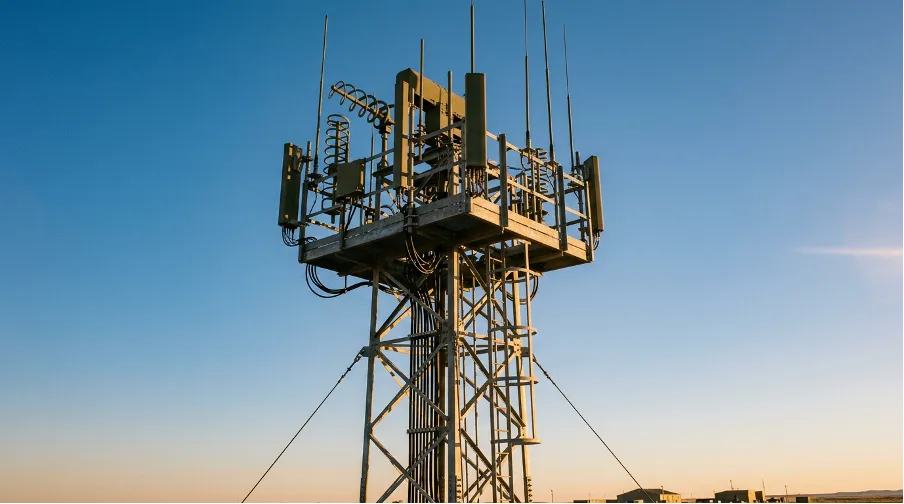
Ships moving through thick fog trust these waves to spot obstacles miles away. A solid x band radar setup cuts through the noise to provide high-resolution imagery that lower frequencies just can't match, giving captains a fighting chance against icebergs and other vessels. You see the difference immediately on the screen; the edges of targets are sharper, and the clutter from sea spray is easier to filter out using Doppler processing.
The specific applications vary significantly depending on the hardware deployment:
- continuous-wave systems for simple motion detection and speed measurement;
- pulsed setups used in long-range tracking and perimeter defense;
- dual-polarization units for detailed weather analysis and precipitation typing.
These variations dictate how clear the return signal looks to the operator. While definitions shift slightly depending on who you ask, the IEEE standardizes the x band frequency range between 8.0 and 12.0 GHz for most radar engineering purposes. This standardization helps manufacturers build compatible components across different borders, ensuring that a receiver built in Germany can talk to a transmitter from Japan without needing a total overhaul.
Deep Space Communication
People often ask what is x band actually doing out there in the void between planets, assuming it's all just dead air. It’s the lifeline for the Deep Space Network, carrying faint whispers from Mars rovers back to Earth across millions of miles. The wavelength is short enough to allow for high-gain antennas on spacecraft, which is crucial when you are counting every gram of payload weight on a rocket launch.
When the Viking landers touched down decades ago, we needed precise measurements to prove they were actually there. Using a specialized x-band radar link allowed scientists to confirm relativity theories by measuring signal delays near the Sun with absurd accuracy. That kind of precision is hard to beat, and it set the benchmark for how we handle telemetry from the outer solar system today.
Military Protocols and Allocation
Governments are understandably possessive about this part of the spectrum. The allocated x-band frequency slots for military use are strictly guarded to prevent interference with civilian communications, creating a partitioned invisible landscape. It’s a crowded house, and signal discipline is paramount to prevent friendly fire in the electronic warfare domain.
Coordination is managed through specific agreements like the NJFA to keep things orderly:
- uplinks are generally reserved in the 7.9 to 8.4 GHz block for satellites;
- downlinks occupy the lower 7.25 to 7.75 GHz segment to separate traffic;
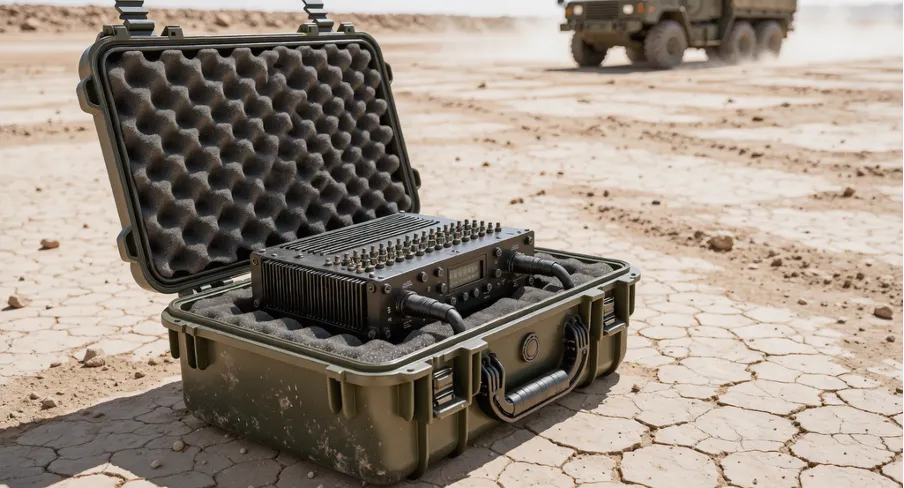
- mobile units operate in narrow paired bands for secure tactical comms.
This separation ensures that a tank commander doesn't accidentally talk over a weather satellite. Sometimes the lines get blurry between reserved spots. A specific radar frequency might sit uncomfortably close to a satellite downlink, requiring strict geographical separation to work without turning the receiver into a brick.
Civilian and Amateur Usage
It’s not all top-secret clearance stuff and orbital dynamics. Motion detectors in automatic doors often run on x-band chips that are cheap to produce and remarkably reliable for short distances, detecting the Doppler shift of a walking person. It is mundane tech, but it relies on the exact same physics that tracks ballistic missiles, just at a fraction of the power output.
Radio enthusiasts have carved out their own niche in this high-frequency playground. Operators working the xband often call it the 3-centimeter band and use it for terrestrial microwave experiments that require strict line-of-sight paths. It requires patience and steady hands to align the dishes, but the bandwidth available for experimentation is massive compared to the cramped lower frequencies.
Limitations of Physics
Rain is the natural enemy here, acting like a wall for short waves. Higher frequencies get absorbed by water droplets, meaning a radio x transmission might fade out completely during a heavy storm if the power isn't cranked up to compensate. Engineers call this "rain fade," and it is the primary reason why satellite TV sometimes dies during a thunderstorm.
Despite the rain fade, the trade-off is worth it for the resolution and data throughput. Operating in this microwave frequency range allows for smaller antennas that still pack a punch, making it ideal for mobile units and aircraft where aerodynamics matter. We accept the weather limitations because the physics of smaller wavelengths allow us to see the world with clearer eyes.







































































































Trusted Worldwide
Operating in more than 50 countries, we provide cutting-edge defense solutions that ensure your safety to every corner of the globe.
Get Advice From Our Experts
Please complete the feedback form to gain exclusive access to our catalog showcasing models that are not available on our website
We’re here to assist you with any inquiries, support, or information you need. Whether you're interested in our defense products, looking to collaborate, or simply have a question, our team is ready to help.